Try The Pursuit of Love by Nancy Mitford. It’s witty, sharp, and the writing style is accessible, making it easy to devour in a weekend. Set against the elegance of an English country house, the story sees Linda and her sisters on a quest to find the perfect partner – and the mishaps and stuffy suitors they meet along the way.
Penguin Modern Classics
1289 books in this series
New to Penguin Modern Classics?
Looking for a hidden gem?
Try Nothing Grows by Moonlight by Torborg Nedreaas. It's a Norwegian classic about a woman's life-destroying love, confessed to a stranger over a long night of wine and cigarettes. It’s tender and rage-inducing in equal measure, and will stay with you long after you’ve turned the last page.
Buying a gift?
Choose The Apple in the Dark by Clarice Lispector. The surreal artwork makes it the kind of book people pick up before they've even read the blurb, but the story of a man attempting to reinvent himself after committing murder means it more than lives up to first impressions.
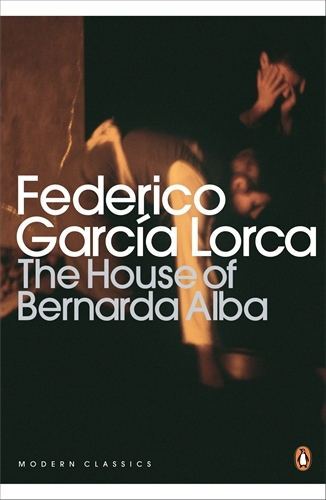
The House of Bernarda Alba and Other Plays
In The House of Bernarda Alba, a tyrannical matriarch rules over her house and five daughters, cruelly crushing their hopes and needs. The other plays here also portray female characters whose desires are tragically and violently frustrated: a woman’s longing for a child in Yerma, and a bride’s yearning for her lover in Blood Wedding. All appeal for freedom and sexual and social equality, and are also passionate defences of the imagination: in Christopher Maurer’s words, ‘poetic drama unsurpassed by any writer of our time’.
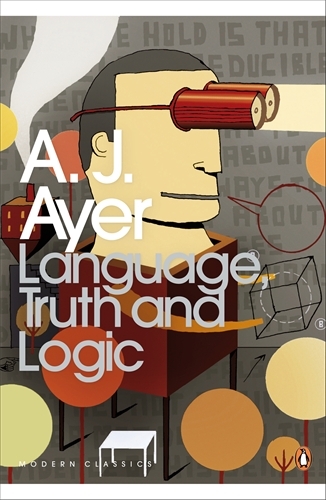
Language, Truth and Logic
If you can't prove something, it is literally senseless - so argues Ayer in this irreverent and electrifying book. Statements are either true by definition (as in maths), or can be verified by direct experience. Ayer rejected metaphysical claims about god, the absolute, and objective values as completely nonsensical. Ayer was only 24 when he finished LANGUAGE, TRUTH & LOGIC, yet it shook the foundations of Anglo-American philosophy and made its author notorious. It became a classic text, cleared away the cobwebs in philosophical thinking, and has been enormously influential.
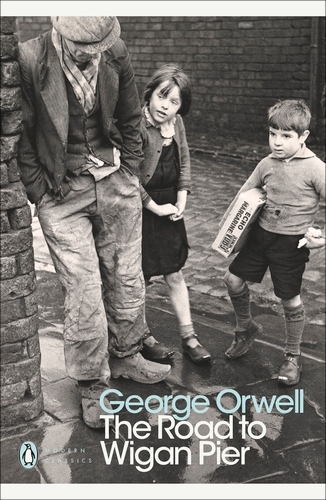
The Road to Wigan Pier
A searing account of George Orwell’s observations of working-class life in the bleak industrial heartlands of Yorkshire and Lancashire in the 1930s, The Road to Wigan Pier is a brilliant and bitter polemic that has lost none of its political impact over time. His graphically unforgettable descriptions of social injustice, cramped slum housing, dangerous mining conditions, squalor, hunger and growing unemployment are written with unblinking honesty, fury and great humanity. It crystallized the ideas that would be found in Orwell’s later works and novels, and remains a powerful portrait of poverty, injustice and class divisions in Britain.
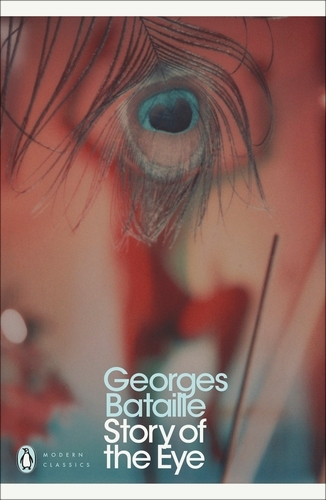
Story of the Eye
Bataille’s first novel, published under the pseudonym ‘Lord Auch’, is still his most notorious work. In this explicit pornographic fantasy, the young male narrator and his lovers Simone and Marcelle embark on a sexual quest involving sadism, torture, orgies, madness and defilement, culminating in a final act of transgression. Shocking and sacreligious, Story of the Eye is the fullest expression of Bataille’s obsession with the closeness of sex, violence and death. Yet it is also hallucinogenic in its power, and is one of the erotic classics of the twentieth century.
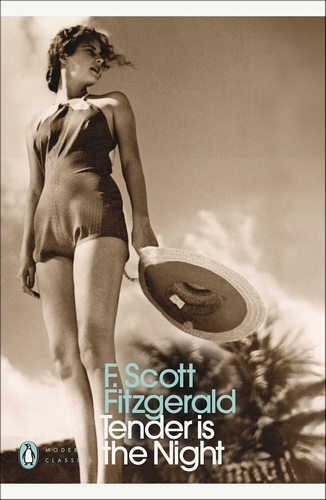
Tender is the Night
Between the First World War and the Wall Street Crash the French Riviera was the stylish place for wealthy Americans to visit. Among the most fashionable are the Divers, Dick and Nicole, who hold court at their villa. Into their circle comes Rosemary Hoyt, a film star, who is instantly attracted to them, but understands little of the dark secrets and hidden corruption that hold them together. As Dick draws closer to Rosemary, he fractures the delicate structure of his marriage and sets both Nicole and himself on to a dangerous path where only the strongest can survive. In this exquisite, lyrical novel, Fitzgerald has poured much of the essence of his own life; he has also depicted the age of materialism, shattered idealism and broken dreams.
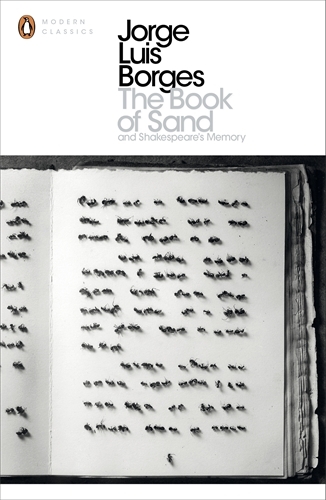
The Book of Sand and Shakespeare's Memory
One of the most remarkable artists of our age.' MARIO VARGAS LLOSA THE BOOK OF SAND was the last of Borges' major collections to be published. The stories are, in his words, 'variations on favourite themes... combining a plain and at times almost colloquial style with a fantastic plot'. It includes such marvellous tales as 'The Congress', 'Undr' and 'The Mirror and the Mask'. Also included are the handful of stories written right at the end of Borges' life - 'August 25, 1983', 'Blue Tigers', 'The Rose of Paracelsus' and 'Shakespeare's Memory.
Imagist Poetry
Imagism was a brief, complex yet influential poetic movement of the early 1900s, a time of reaction against late nineteenth-century poetry which Ezra Pound, one of the key imagist poets, described as ‘a doughy mess of third-hand Keats, Wordsworth … half-melted, lumpy’. In contrast, imagist poetry, although riddled with conflicting definitions, was broadly characterized by brevity, precision, purity of texture and concentration of meaning: as Pound stated, it should ‘use no superfluous word, no adjective, which does not reveal something … it does not use images as ornaments. The image itself is the speech’. It was this freshness and directness of approach which means that, as Peter Jones says in his invaluable Introduction, ‘imagistic ideas still lie at the centre of our poetic practice’.
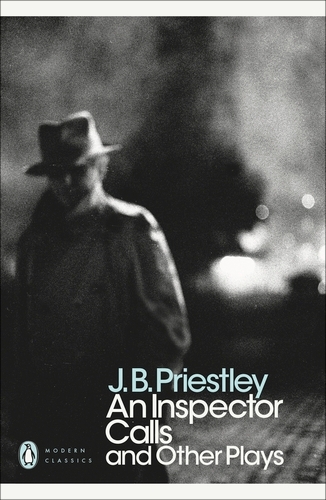
An Inspector Calls and Other Plays
An Inspector Calls, first produced in 1946 when society was undergoing sweeping transformations, has recently enjoyed an enormously successful revival. While holding its audience with the gripping tension of a detective thriller, it is also a philosophical play about social conscience and the crumbling of middle class values. Time and the Conways and I Have Been Here Before belong to Priestley’s ‘time’plays, in which he explores the idea of precognition and pits fate against free will. The Linden Tree also challenges preconceived ideas of history when Professor Linden comes into conflict with his family about how life should be lived after the war.
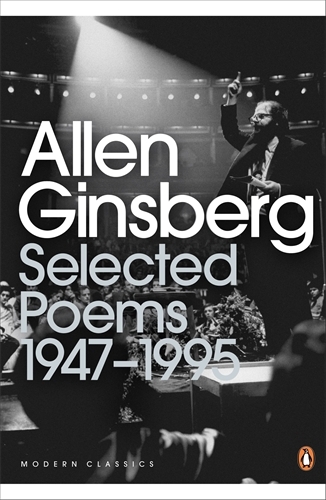
Selected Poems
Chosen by Ginsberg himself from nearly fifty years of experimental, groundbreaking verse, this selection, in his words, ‘summarizes what I deem most honest, most penetrant of my writing’, and includes lesser known and later works which go beyond his iconic Beat Generation image. Presented chronologically, and ranging from early works such as ‘Paterson’ (1949) to selections from White Shroud (1980–85) and Cosmopolitan Greetings (1986–92), and including the classic poems Howl (1955–56) and Kaddish (1959–60) as well as songs, recent uncollected poems and notes by the author, this volume brings together the most intensely personal verse of a great American poet – incandescent explorations that expand the consciousness with their breadth of vision and depth of humanity.
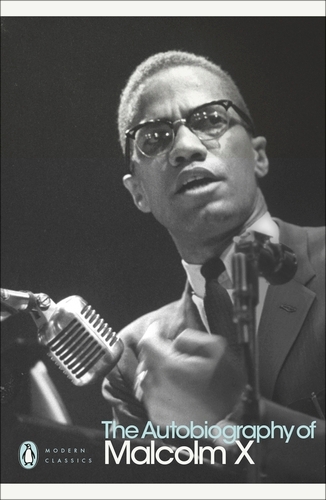
The Autobiography of Malcolm X
From hustling, drug addiction and armed violence in America's black ghettos Malcolm X turned, in a dramatic prison conversion, to the puritanical fervour of the Black Muslims. As their spokesman he became identified in the white press as a terrifying teacher of race hatred; but to his direct audience, the oppressed American blacks, he brought hope and self-respect. This autobiography (written with Alex Haley) reveals his quick-witted integrity, usually obscured by batteries of frenzied headlines, and the fierce idealism which led him to reject both liberal hypocrisies and black racialism.
Cup Of Gold
This lush, lyrical fantasy is Steinbeck's sole work of historical fiction. Henry Morgan ruled the Spanish Main in the 1670s, ravaging the coasts of Cuba and America and striking terror wherever he went. His lust and greed knew no bounds, and he was utterly consumed by two passions; to possess the mysterious woman known as La Santa Roja, the Red Saint, and to conquer Panama and wrest 'the cup of gold' from Spanish hands. Fantastic, swashbuckling stuff!
The Mahabharata
The Mahabharata is some 3,500 years old and is the longest poem in any language. It is one of the founding epics of Indian culture and, with its mixture of cosmic drama and profound philosophy (one small section forms the BHAGHAVAD GITA) it holds aunique place in world literature. In this drastically shortened prose rendering, Narayan uses all his extraordinary talents to convey to a modern reader why this is such a great story. Filled with vivid characters, obsessed with the rise and fall of gods, empires and heroes, Narayan's MAHABHARATA is an enormously enjoyable experience and the perfect introduction to the otherwise bewildering Indian cosmology.
The Pastures of Heaven
Each of these delightful interconnected tales is devoted to a family living in a fertile valley on the outskirts of Monterey, California, and the effects that one particular family has on them all. Steinbeck tackles two important literary traditions here; American naturalism, with its focus on the conflict between natural instincts and the demand to conform to society's norms, and the short story cycle. Set in the heart of 'Steinbeck land', the lush Californian valleys.
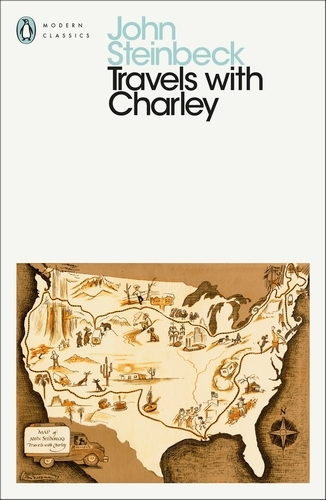
Travels with Charley
'Delightful. This is a book to be read slowly for its savor.' The Atlantic
In 1960, John Steinbeck set out in his pick-up truck with his dog Charley to rediscover and chronicle his native USA, from Maine to California.
He felt that he might have lost touch with its sights, sounds and the essence of the American people. Moving through the woods and deserts, dirt tracks and highways to large cities and glorious wildernesses, Steinbeck observed - with remarkable honesty, insight and a humorous eye - the gamut of America and the people who inhabited it.
His 10,000-mile journey took him through almost forty states, where he saw things that made him proud, angry, sympathetic and elated. A rugged and passionate adventure of self-identity, Steinbeck's vision of the changing world still speaks to us prophetically through the decades.
In 1960, John Steinbeck set out in his pick-up truck with his dog Charley to rediscover and chronicle his native USA, from Maine to California.
He felt that he might have lost touch with its sights, sounds and the essence of the American people. Moving through the woods and deserts, dirt tracks and highways to large cities and glorious wildernesses, Steinbeck observed - with remarkable honesty, insight and a humorous eye - the gamut of America and the people who inhabited it.
His 10,000-mile journey took him through almost forty states, where he saw things that made him proud, angry, sympathetic and elated. A rugged and passionate adventure of self-identity, Steinbeck's vision of the changing world still speaks to us prophetically through the decades.
The Wayward Bus
The Wayward Bus travelled the backroads through the lush California countryside. Its driver was a man of the land - lusty, hot-blooded and uninhibited. On the bus was a girl who danced at stag parties, a travelling salesman strictly out for fun, a boy coming into manhood and a college girl pursuing her secret, passionate quest. This is a story of crisis and passion, of love and longing. In many ways it is one of Steinbeck's most powerful novels, not least because it shows just how profound his knowledge of human beings and their emotions is.
The Age of Reason
Set in the volatile Paris summer of 1938, The Age of Reason follows two days in the life of Mathieu Delarue, a philosophy teacher, and his circle in the cafés and bars of Montparnasse. Mathieu has so far managed to contain sex and personal freedom in conveniently separate compartments. But now he is in trouble, urgently trying to raise 4,000 francs to procure a safe abortion for his mistress, Marcelle. Beyond all this, filtering an uneasy light on his predicament, rises the distant threat of the coming of the Second World War.

Collect the Penguin Modern Classics
Choose three Penguin Modern Classics for only £21 over on the Penguin Shop.