Penguin Classics in translation
Inger Christensen (Author)
,
Denise Newman (Translator)
This is the story of a young woman who is spirited away to St. Petersburg from Copenhagen by a lovestruck admirer. When she dies after the Russian Revolution, her ashes are carried back to Denmark, igniting a chain reaction of further stories, told and retold by the women in her family against a shifting ground of meaning. We meet murderers and fable-like characters, such as the hilarious and unsettling Viktor Blanke, who manages to seduce not one but three generations of mothers and daughters. Natalja, we discover, cannot be held in one place. Rather than giving in to the tragedy that befalls her, she wills herself to become someone else, reinventing her family’s narrative one irresistible tale at a time.Tantalizing and full of wit, this remarkable, shape-shifting novel is available in English for the first time.
Brigitte Reimann (Author)
,
Lucy Jones (Translator)
Kathrin – five years into a disenchanting marriage – struggles to work the farm with her sister-in-law while her husband Heinrich is away fighting for the Third Reich. To help them with the harvest, Heinrich arranges for Alexei, a Russian prisoner of war, to labour in the fields. Though initially suspicious of this watchful stranger, Kathrin is soon drawn to Alexei, with ruinous consequences.
First published in 1956, Woman in the Pillory is a formative novella by one of East Germany’s most significant writers, showcasing Brigitte Reimann’s vivid ideological engagement with the legacy of Nazi Germany and the Communist drive to create ‘a new kind of person’ following the devastation of the war.
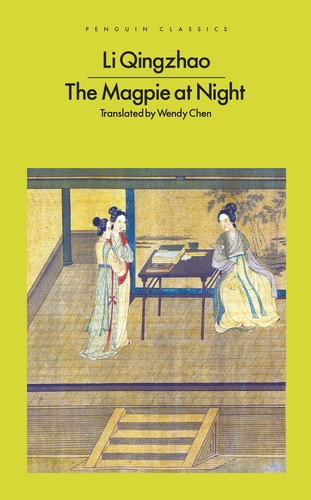
Li Qingzhao (Author)
,
Wendy Chen (Translator)
Li Qingzhao is justly celebrated for her place in Chinese literary history. She was a poet with a wry, unsentimental style and a rich sense of melody. Her ci – lyrics that were originally set to music – are glorious in their depth and genius, spare and arresting on the line. They evoke with rare immediacy the haunting beauty of country life during the Song dynasty; the unseen, restive labour of the poet; and Li Qingzhao’s bracing take on what it means to create art as a woman in the shadow of exile, war, imprisonment, and an unwelcoming literary establishment.
In Wendy Chen’s splendid new translation, each poem is as sharp and fresh as the edge of a new spring leaf. These richly textured bolts of melody are masterpieces of verse, as resonant and bracing today as they were in the eleventh century; and they underscore Li Qingzhao status as a necessary and iconic literary figure.
Tove Ditlevsen (Author)
,
Sophia Hersi Smith (Translator)
,
Jennifer Russell (Translator)
I want to write a book about Vilhelm’s room and the events which took place in it, or arose from it; those that led to Lise’s death, which I have survived only so that I might write down the story of her and Vilhelm...
The ripples from a breakup radiate outwards from the room where a married couple once loved each other, and a bizarre Lonely Hearts advert sets off a train of tragicomic events that lead to an inevitable conclusion. Tove Ditlevsen’s final novel – published a year before her suicide in 1976 – is a masterful conclusion to a great work of writing: a blackly funny and devastating tour-de-force that pulses with life even as it journeys towards death.
Akiyuki Nosaka (Author)
,
Ginny Tapley Takemori (Translator)
In the dying days of the War, Seita and Setsuko must fend for themselves. Firebombs have obliterated their home in Kobe, leaving them searching for shelter and scrambling to survive in the depths of the countryside. But, as their suffering becomes a constant companion, so do the lights of the fireflies – shining from the bomber planes, and the insects glowing by the lake at night.
This unforgettable semi-autobiographical tale by Akiyuki Nosaka won him the Naoki Prize, cementing his place in the Japanese cultural canon. Published here for the first time as a standalone story, Grave of the Fireflies illuminates the untold sorrows of normal people who live in the shadow of war.
Oh Jung-hee (Author)
,
Bruce Fulton (Translator)
,
Ju-Chan Fulton (Translator)
In this emblematic selection of her stories, Oh Jung-hee probes beneath the surface of seemingly quotidian lives to expose nightmarish family configurations warped by desertion, psychosis, and death. In ‘Chinatown’ a young girl living on the edge of the city’s Chinese community comes of age among mundane violences, collisions with adult sexuality and the American occupation; in ‘The Garden Party’ a woman grapples with her conflicting identities of wife, mother and writer at an alcohol-fuelled gathering. Throughout a career spanning six decades, Oh Jung-hee has drawn comparisons to Alice Munro, Virginia Woolf, and Joyce Carol Oates, and is assuredly a trailblazing writer.
Gun-Britt Sundström (Author)
,
Kathy Saranpa (Translator)
‘I want to have him, I really do. I just don’t want him to have me.’
Martina and Gustav, students in 1970s Stockholm, meet and fall immediately into coupledom. But what is coupledom? A route to marriage? A declaration of co-dependency? A new dimension of commitment and responsibility? A sexual confrontation? Or is it a habit that an intelligent person must consider breaking? Martina and Gustav discuss their relationship endlessly, between themselves and with others, as they try to make it work.
Engagement, set during a time of social change and political upheaval, sees Martina trying to engage with the world on her own terms. Unwilling to marry, she finds herself in a state of permanent engagement while her friends settle down to marriage and children; uncertain of the world’s future, she engages with demos, sit-ins and philosophy seminars in her quest for a new blueprint for joy. First published in 1976, when it was heralded as an instant classic, Engagement remains as relevant, hilarious and heartbreaking today.
Yuko Tsushima (Author)
,
Lisa Hofmann-Kuroda (Translator)
Mitch and Yonko haven’t spoken in a year. As children, they were inseparable, raised together in an orphanage outside Tokyo—but ever since the sudden death of Mitch’s brother, they’ve been mourning in their private ways, worlds apart. In the aftermath of the Fukushima nuclear catastrophe, they choose to reunite, finding each other in a city undone by disaster.
Mitch and Yonko have drifted apart, but they will always be bound together. Because long ago they witnessed an unspeakable tragedy, a tragedy that they’ve kept secret for their entire lives. They never speak of it, but it’s all around them. Like history, it repeats itself.
Yuko Tsushima’s sweeping and consuming novel is a metaphysical saga of postwar Japan. Wildcat Dome is a hugely ambitious exploration of denial, of the ways in which countries and their citizens avoid telling the truth—a tale of guilt, loss, and inevitable reckoning.
'Tsushima evades any label, her fiction transcends gender to focus on the existential loneliness that is at the heart of humanity.' Japan Times
Seicho Matsumoto (Author)
,
Jesse Kirkwood (Translator)
Onizuka Kumako is a fierce woman: tall, beautiful, and not afraid to speak her mind. In Tokyo bars, she seduces customers and commits petty crime, using her connections to the local yakuza to get by. When she meets Shirakawa Fukutaro, a rich widower desperate for companionship and unaware of her shady past, the two hit it off and are soon married. But their newlywed bliss is suddenly cut short: one rainy July evening, their car veers off course, plunges into the harbour and Fukutaro is pulled beneath the waves.
Suspected of murder and labelled a femme fatale, Kumako is hounded by the press, but stays firm, repeatedly proclaiming her own innocence. As pressure from dogged journalists mounts, the tide of public opinion is rising against her. But when a scrupulous defence lawyer takes on her case, doubt begins to creep in . . .
In this intricate, psychological noir, masterfully translated into English for the first time, Seicho Matsumoto draws out the hidden demons that guide our convictions, our biases and our deepest desires.
Torborg Nedreaas (Author)
,
Bibbi Lee (Translator)
In the blue dusk of a spring evening, a man is drawn to a lonely, beautiful stranger across a station platform. She follows him home, and over one heady night of wine and cigarettes, recounts to him the devastating story of her life . . .First published in 1947, Nothing Grows by Moonlight tells the haunting tale of one woman’s soul-shattering love affair. When an obsessive passion for her high school teacher consumes a small-town seventeen-year-old, her life spirals out of control, giving way to pregnancy, poverty and alienation. Here, darkness and light converge, and unrequited love blooms against the shadows of societal injustices, as she fights for autonomy: over her life, her mind and her body.Captivating, visceral and brimming with emotion, Nothing Grows by Moonlight is a feminist classic of Scandinavian literature, and an uncompromising ode to female desire.
Elsa Morante (Author)
,
Jenny McPhee (Translator)
'Thrillingly addictive, magnificent, luxurious . . . as staggering and absorbing as a great 19th-century novel' Telegraph
'I loved it and it had been a long time since I had read anything that gave me such life and joy' Natalia Ginzburg
The first unabridged English translation of the electrifying novel of secrets and delusions, from one of the greatest Italian writers of the twentieth century.
Elisa – orphaned as a child, raised by a ‘fallen woman’, fed by fairy tales – has lived in an outlandish imaginary world for years. When her guardian dies, she feels compelled to confront her family’s tortured and dramatic past, weaving the tale of her mother and grandmother through a history of intrigue, treachery, deception and desire. But as her saga of three generations of Sicilian women proceeds, it becomes something else entirely, taking in a whole legacy of oppression and injustice. By turns flamboyant and intense, raging and funny, Lies and Sorcery is a celebration of the female imagination, and the power of storytelling itself.
First published in 1948, Elsa Morante’s debut novel won the Viareggio Prize and earned her the lasting admiration of generations of writers from Italo Calvino and Natalia Ginzburg to Elena Ferrante.
Translated by Jenny McPhee
WINNER OF THE ALTA 2024 ITALIAN PROSE IN TRANSLATION AWARD
WINNER OF THE JOHN FLORIO PRIZE
SHORTLISTED FOR THE OXFORD-WEIDENFELD PRIZE 2024
Tove Ditlevsen (Author)
,
Sophia Hersi Smith (Translator)
,
Jennifer Russell (Translator)
,
Olga Ravn (Introducer)
While Tove Ditlevsen is now famous around the world as an extraordinary prose writer, in Denmark she has also long been celebrated as a poet. She published her first collection in her early twenties, and continued writing and publishing poetry until the end of her life. This new selection offers English readers a chance to explore her brilliant, surprising verse across nearly four decades of writing.
In this playful, mournful, witty collection, little girls stand tip-toe inside adult bodies, achievements in literature and lethargy are unflinchingly listed, and lovers come and go like the seasons. Gorgeously translated by Jennifer Russell and Sophia Hersi Smith, with an introduction by Olga Ravn, There Lives a Young Girl in Me Who Will Not Die cements Ditlevsen as one of the twentieth century's most creative writers.
Tove Ditlevsen (Author)
Life in Tove's neighbourhood in Copenhagen is confusing and difficult: her father can't find work, her mother is angry and remote, and Tove herself sometimes thinks she's been exchanged at birth. But 'inside of me long, mysterious words began to crawl across my soul' and she soon realizes that she has a vocation, something unknowable and secret within, and that if she can only find the right words, she will one day succeed in forging a true life of her own - somewhere beyond the narrow streets of her childhood.
The first volume in Ditlvesen's autobiographical trilogy, Childhood captures the triumphs and tragedies of girlhood with intense vividness and a poet's clarity of vision.
Tove Ditlevsen (Author)
Tove is only twenty, but she's already famous, a published poet and wife of a much older literary editor. Her path in life seems set, but she has no idea of the struggles that lie ahead - love affairs, an unwanted pregnancy, physical pain and crippling opioid addiction. As the years go by, the central tension of Tove's life comes into painful focus: the terrible lure of dependency, in all its forms, and the possibility of living life freely and fearlessly - as an artist on her own terms.
The final volume in Ditlvesen's autobiographical trilogy and perhaps her masterpiece, Dependency is a dark and blisteringly honest account of addiction, and the way out.
Tove Ditlevsen (Author)
,
Tiina Nunnally (Translator)
Unable to stay on to high school, Tove starts her first job (which lasts only one day) and soon embarks on a varied and chequered career: as au pair, cleaner, stock-room assistant and office worker. But Tove is hungry, for poetry, for love, for real life to begin. As she navigates exploitative bosses, uninspiring boyfriends and a Nazi landlady, she struggles to keep her poetic vocation in sight - until she finally realizes the 'miracle' that she has always dreamed of.
The second volume in Ditlvesen's autobiographical trilogy, Youth is a sensitive, often funny and almost painfully truthful portrayal of adolescence.